For Ghanaian dealers, importing a car from China can be commercially attractive, but the purchase price is only one part of the calculation. Before placing an order, dealers need to confirm vehicle eligibility, steering configuration, customs valuation, shipping costs, inspection requirements, and registration procedures.
The most reliable approach to importing Chinese cars is to calculate the expected landed cost before payment and confirm the exact vehicle specification and documents with the exporter. Ghana's Customs system allows vehicle duty to be checked using information such as the VIN, model, year, and make.
Yes. Ghana imports vehicles through its established customs and port system, with Tema serving as the country's largest port and handling Ro-Ro, container, and other vessel services.
However, dealers should confirm three issues before ordering: whether the vehicle meets Ghana's import requirements, how Customs will assess its duty and taxes, and whether the final configuration can be registered locally.
Right-hand-steering vehicles are subject to restrictions under Ghanaian Customs rules, although a dispensation process exists in certain circumstances. For most dealers, confirming steering configuration before shipment is therefore essential.
Vehicle age can affect the cost of importing into Ghana.
Ghana's Customs Act provides overage penalties for certain imported vehicles. For motor cars, the schedule increases the penalty as vehicle age moves beyond 10 years. Commercial vehicles such as buses, coaches, and vans have a separate age schedule.
This makes model year an important part of the RFQ. Dealers should not request only a model name. The quotation should specify:
Model + model year + engine + trim + steering configuration + mileage/condition + VIN where available.
Steering configuration also deserves attention before the vehicle leaves China. Ghana Customs states that right-hand-steering vehicles are generally not permitted, subject to a policy dispensation, and vehicles approved under the relevant process may require conversion before they can operate normally on Ghanaian roads.
For a dealer, it is much more efficient to resolve this issue before shipment than after the vehicle reaches Tema.
The exporter should provide a complete document package appropriate to the transaction and destination.
Key documents for vehicle clearance include the Bill of Lading or Waybill and vehicle title, according to Ghana Revenue Authority guidance.
For commercial orders, buyers should also keep the sales contract, commercial invoice, packing or shipping documentation where applicable, vehicle specifications, VIN/chassis information, and any inspection or certification documents required for the specific vehicle.
The consignee should check that the vehicle information is consistent across the documents. Differences in model year, VIN, vehicle description, or consignee information can create unnecessary clearance problems.
For importing Chinese cars, document verification should therefore take place before the balance payment and well before the vessel departs China.
The vehicle purchase price should never be treated as the final import cost.
Ghana Customs calculates vehicle duty using factors including the vehicle's manufacturer price, depreciation based on age, FOB value, exchange rate, freight, and insurance. The GRA also provides an ICUMS vehicle duty calculator for estimating applicable charges.
The total landed cost can include:
Vehicle price + freight + insurance + import duty + applicable taxes and levies + examination/processing charges + port charges + clearing-agent fees + local delivery and registration costs.
The applicable duty structure varies according to vehicle classification, engine capacity, vehicle type, age, and other factors. GRA's published schedule includes separate categories for passenger cars, commercial vehicles, vans, buses, and other vehicle types.
Dealers should therefore obtain a duty estimate using the exact VIN or vehicle specification, rather than applying a generic percentage to the supplier's quoted price.
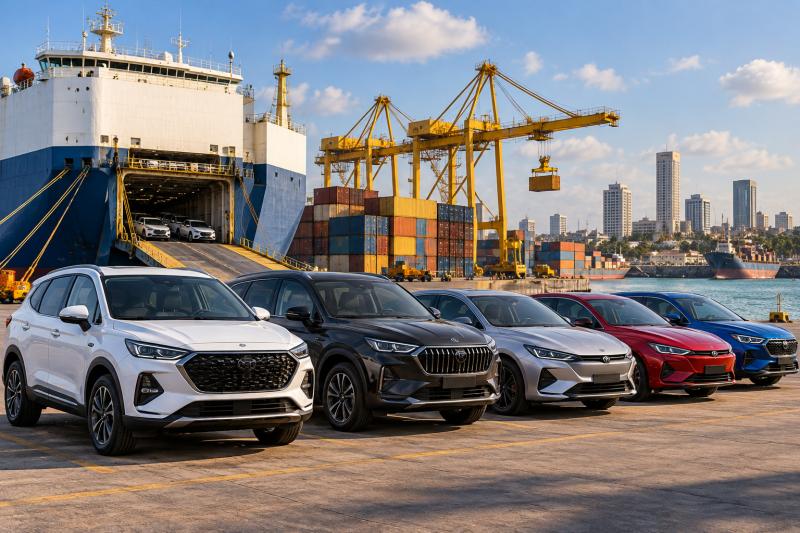
Tema is the primary port consideration for many Ghana vehicle imports. Ghana Ports & Harbours Authority describes Tema as Ghana's largest port, with services including Ro-Ro and container shipping and connections to international shipping routes.
The appropriate shipping method depends on order size and vehicle type.
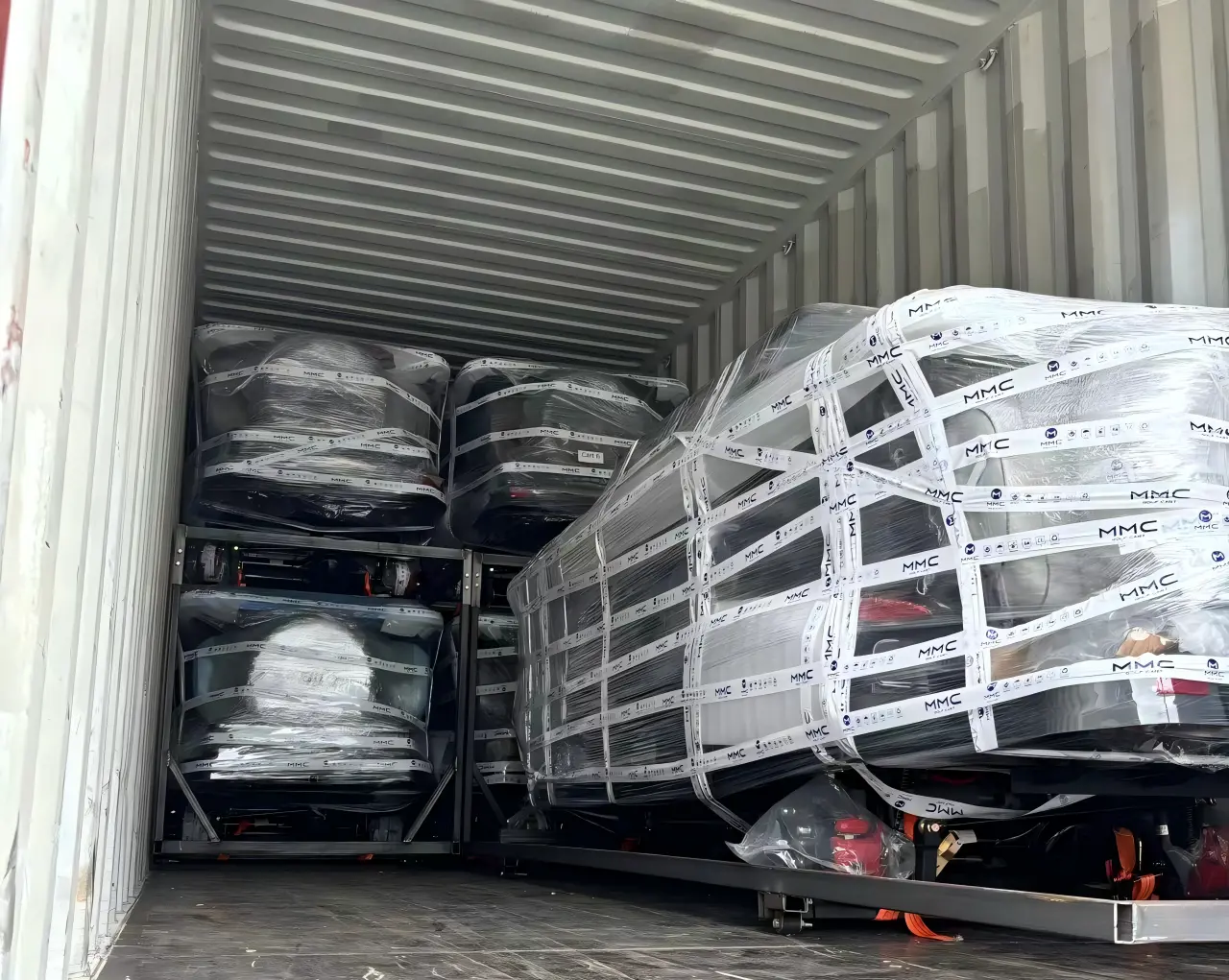
For individual vehicles or smaller orders, container shipping may be considered. Larger quantities may make Ro-Ro or other vehicle-shipping arrangements more commercially suitable, depending on carrier schedules and availability.
Transit time should not be treated as a fixed number. Sailing schedules, transshipment, port congestion, vessel availability, customs procedures, and documentation can all affect the final delivery date. Ghana Ports & Harbours Authority notes that Tema receives both direct and transshipment services from international routes.
Dealers should therefore request an estimated sailing schedule and port-to-port shipping cost from the exporter or freight forwarder rather than relying on a generic delivery promise.
A practical workflow is:
Vehicle selection → quotation → VIN/specification confirmation → inspection → payment → shipping → customs clearance → vehicle inspection → DVLA registration.
After arrival, Ghana Customs handles the import clearance process and duty assessment. GRA states that vehicle duty can be checked in ICUMS using the VIN/chassis number, model, year, and make.
Registration then involves the Driver and Vehicle Licensing Authority. DVLA requires, among other things, the vehicle, original customs entry documents, a vehicle inspection report from a designated Private Vehicle Testing Station, and the required owner identification documents.
The vehicle is presented for inspection and verification before the registration process is completed.
This is why dealers should treat customs documents and vehicle identity as part of the purchasing decision rather than paperwork to be handled only after arrival.
Before requesting an export quotation, Ghanaian dealers should provide the supplier with a clear RFQ.
At minimum, specify:
Target vehicle type and model
Model year
Engine and transmission
Steering configuration
New or used condition
Quantity
Destination port: Tema
Preferred shipping method
Required documentation
FOB or CIF quotation requirement
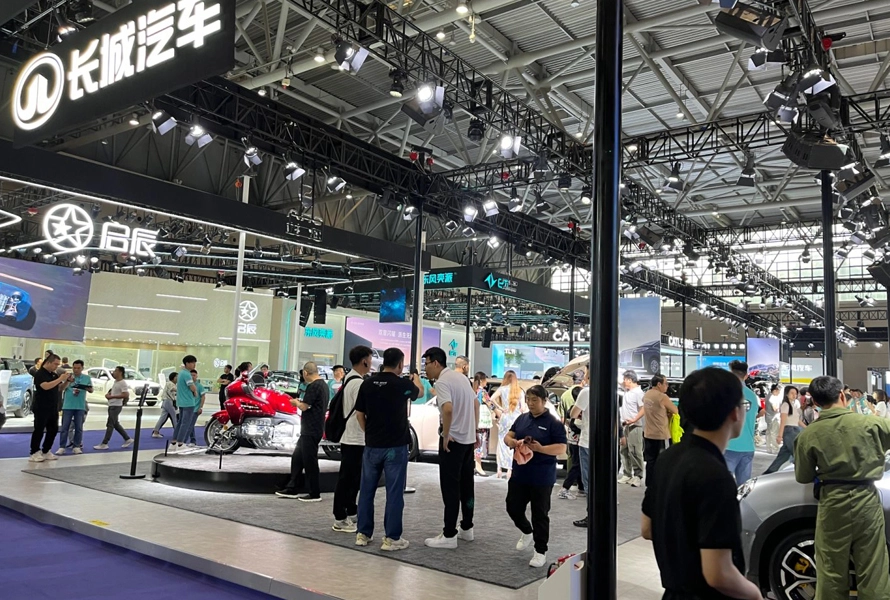
For the vehicle mix, dealers can consider compact SUVs and sedans for retail customers, MPVs for family and passenger transport, and vans or light commercial vehicles for business users. The right mix depends on local demand, expected retail price, spare-parts support, and the cost of importing each configuration.
When comparing suppliers, do not compare vehicle prices alone. Ask each exporter to quote the same specification and Incoterm so that the difference in landed cost can be evaluated accurately.
For dealers importing a car from China to Ghana, successful procurement depends on controlling the entire process rather than simply finding a low China-side price.
Vehicle eligibility, age, steering configuration, customs valuation, shipping to Tema, inspection, clearance, and DVLA registration all need to be considered before the order is confirmed. Ghana Customs provides tools for estimating vehicle duty, while DVLA defines the documentation and inspection requirements for registration.
For dealers importing Chinese cars in volume, the safest purchasing process is to confirm the exact vehicle specification, calculate the expected landed cost, verify export documents, and arrange inspection before shipment.
Yes. Vehicles can be imported through Ghana's established customs and port system, subject to applicable requirements.
Tema is Ghana's largest port and handles Ro-Ro and containerized cargo.
Customs considers factors including vehicle type, age, value, freight, insurance, and applicable tax and levy rules.
Right-hand-steering vehicles are generally restricted, although Ghana provides a specific dispensation process in certain cases.
DVLA lists original customs entry documents, a vehicle inspection report, the vehicle, and required owner identification among the registration requirements.
 1113, No. 19, Dapingzheng Street, Daping Street, Yuzhong District, Chongqing, China
  sensuaa@outlook.com
 +8619196383097
 English
 한국어
한국어 français
 Español
 русский
 português
 العربية
 tiếng việt
 ไทย
ไทย Suomi
Suomi